Solar Panel Cleaning
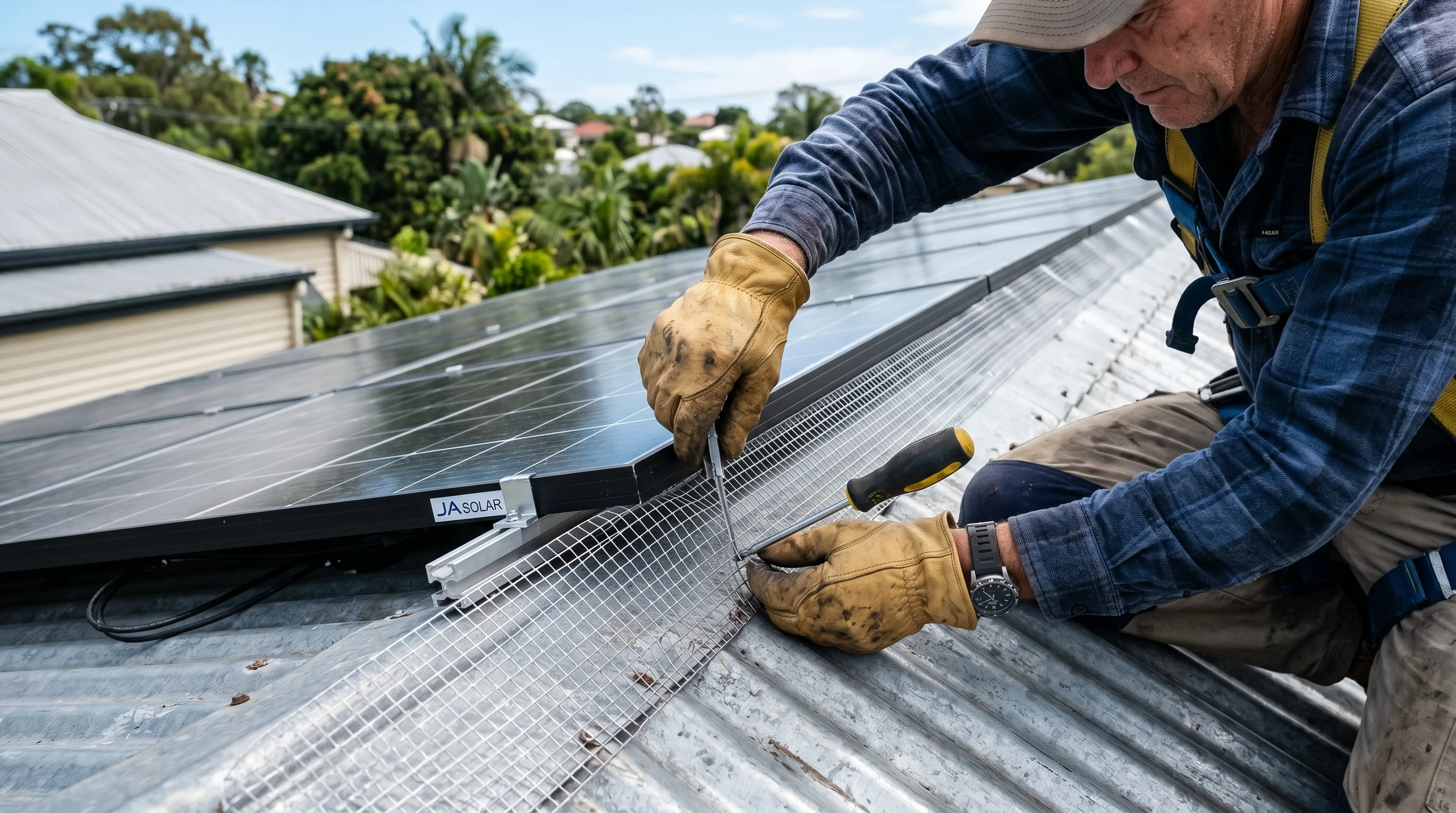
Bird mesh installation.
Stop Pigeons Nesting Under Your Solar Panels
If you've got solar panels on a Queenslander or post-war brick in Auchenflower, Toowong, or anywhere across Brisbane's inner west, there's a good chance pigeons have already noticed them. The gap between your panels and the roof is warm, sheltered, and almost perfectly sized for a nest. Once a pair moves in, others follow.
Bird mesh installation closes that gap for good.
What the Work Actually Involves
A technician fits a UV-stabilised polypropylene or galvanised steel mesh around the perimeter of your panel array. The mesh clips or screws to the panel frames (no holes drilled into your roof) and sits flush against the roof surface, sealing the underside without restricting airflow.
Before fitting, the technician clears out any existing nesting material, dried droppings, and debris from under the panels. This matters: leaving a nest in place traps moisture and can block drainage points on your roof sheeting.
The mesh is cut and shaped on-site to fit your specific array layout. Most residential systems in Auchenflower and surrounds take two to four hours, depending on roof pitch and panel count.
When You Actually Need It
You don't need to see a pigeon on your roof to have a problem underneath your panels. Signs worth acting on:
- Cooing or scratching sounds from your roof, particularly in the mornings
- Bird droppings concentrated around the base of your panels rather than spread across them
- A noticeable drop in system output that can't be explained by soiling alone (nesting material can partially block panels from underneath)
- Visible straw, feathers, or debris poking out from the panel edge
In Brisbane, pigeons tend to establish nests in late autumn through winter, when they're seeking shelter. If you've recently had a clean and the technician found nesting material underneath, that's the clearest signal.
You only need the mesh fitted once. It's not a seasonal or recurring service, though it's worth checking the condition of the mesh during your annual clean.
What It Costs
For a typical residential system in the Auchenflower cluster (5kW to 10kW, standard pitched roof), bird mesh installation typically falls between $300 and $600. Where your job lands in that range depends on:
- Number of panels and total array perimeter (more linear metres of mesh, higher cost)
- Roof pitch (steeper roofs take longer and involve more safety setup)
- Whether significant debris removal is needed first
- Whether it's combined with a panel clean on the same visit
Booking a clean and mesh installation together in one visit usually works out cheaper than two separate call-outs.
What's Included and What's Not
Typically included:
- Removal of existing nesting material and debris from under panels before fitting
- Mesh cut and fitted to the panel perimeter
- Clips or fasteners appropriate for your panel frame type
- A basic check that mesh is sealed at all contact points with the roof surface
Not included:
- Roof repairs if nesting has caused damage (that's a roofing trade job, separate quote)
- Panel cleaning (quoted separately unless booked together)
- Any electrical work on your inverter or wiring if bird damage has reached that level
Is It Right for Your Roof?
Bird mesh suits most standard roofs in the inner west: corrugated iron, Colorbond, terracotta tile, and concrete tile. The clips used don't penetrate the roof surface, so there's no impact on your roof warranty in most cases.
It's worth asking about compatibility if you have a flat or near-flat roof (panels are typically racked higher and the gap may differ) or if your system is unusually close to the ridge where heat and airflow behave differently.
If your roof has existing damage, significant moss growth, or the flashing around penetrations looks questionable, it's worth having a roofer look at that before anything goes on top.
A Honest Note on Safety and Insurance
Working on a pitched roof with solar panels carries real risk. The technicians we connect you with carry public liability insurance and work to Safe Work Australia guidelines for roof work. It's fair to ask any technician you book, through us or anyone else, to confirm their insurance cover before they start.
We're a referral service: we connect you with vetted local providers who carry appropriate cover. We don't send anyone up a roof who isn't set up to work safely on one.
If you're not sure whether you have a nesting problem yet, a standard panel clean is often the first step. The technician will check underneath during the service and can give you an honest read on whether mesh is worth doing. That's a reasonable place to start.
Quick answers
Frequently asked.
Will bird mesh damage my solar panels or void the panel warranty?
How long does bird mesh last on a Brisbane roof?
Can I fit bird mesh myself to save money?
Do I need to clean the panels before mesh is installed?
How do I know if pigeons are already nesting under my panels?
Does bird mesh need to be replaced after a storm or hail event?
Ready to book
Quickest is by phone.
Up-front pricing on the call. Booked in one go. No site visit needed.